
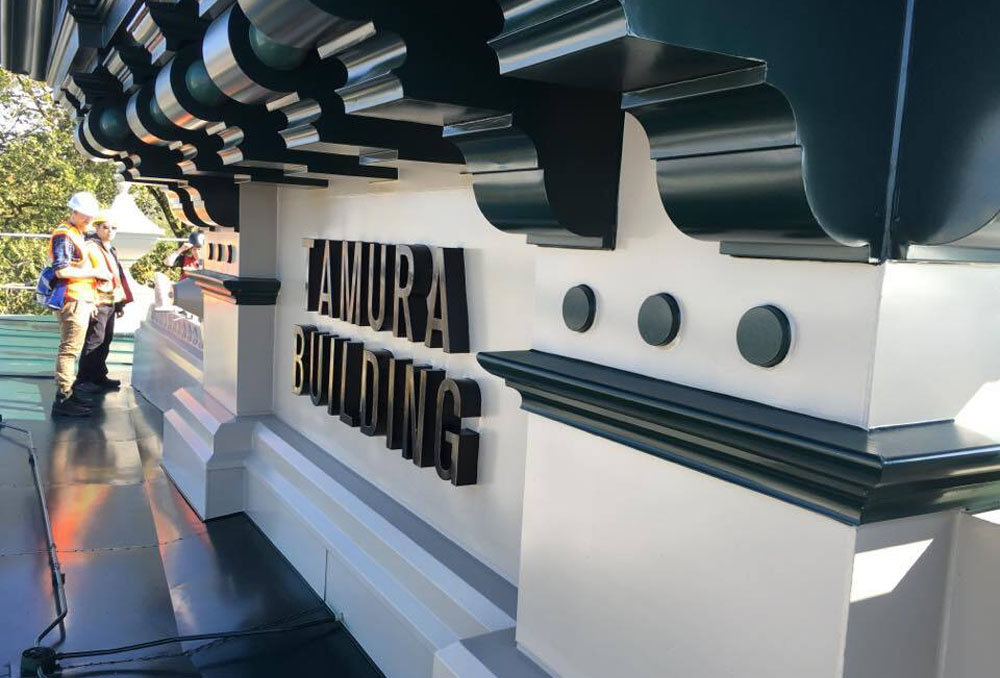
Built in 1912/13, it is a significant early Japantown building which contributes to the intact urban character of the Powell Street facades in the sub area of Japanese Village of the Downtown- Eastside/Oppenheimer district area, dating, for the most part, from 1905 to 1938.
Designed by Townsend and Townsend in an exuberant Edwardian Commercial Style, the building incorporates elaborate and overstated roof top cornices, pediments and applied columns, and the use of massive urn elements as likely Japanese cultural influences. The building is a surviving example of a number of speculative mixed-use blocks constructed on Powell Street and other areas of Japantown just prior to the collapse of the City’s building boom in 1913.
The building is currently registered in the Vancouver Heritage Registry as an A resource. Work performed included articulation of its upper façade, including detailed the buff face brick, pattern of fenestration on the first, second and third floors of large punched window openings with projecting concrete sills and elaborate bracketed projecting sheet metal cornice. Also applied were three storey high sheet metal columns with Corinthian Style capitals, large ornate end brackets on Powell and Dunlevy Streets, and elaborate bases to the set of corner columns at Dunlevy and Powell.
Surviving storefront elements included the lower sheet metal cornice with brackets relating to the upper cornice, elaborate ornamental gabled pediments over the corner suite entry and three more over the corner suite Dunlevy Street windows. Original dressed granite cladding were added at the corner of Dunlevy and Powell Streets, chamfered granite storefront bases at all store front entries and surviving clear storey windows and glazing on the Dunlevy storefronts. Alcove tile surfaces were also kept at all of the storefront entries, except the corner unit, as well as at the hotel entry. Rock faced granite base masonry stepping up Dunlevy beneath the Corner suite units, and original wood fixed windows on the Dunlevy elevation of the corner suite. Surviving interior features including the subway tile with ornamental cap wainscot of the hotel entry and the surviving pressed tin ceiling in the corner unit. Evidence of advances in functional design, including the provision of natural light with skylights and open light courts, central heating, and bathrooms
Request a Quote
Ready to talk metal? We make it easy. Contact us today and let our team bring your vision to reality.